Geneva: Reports of chemical warfare in Sudan warrant international probe
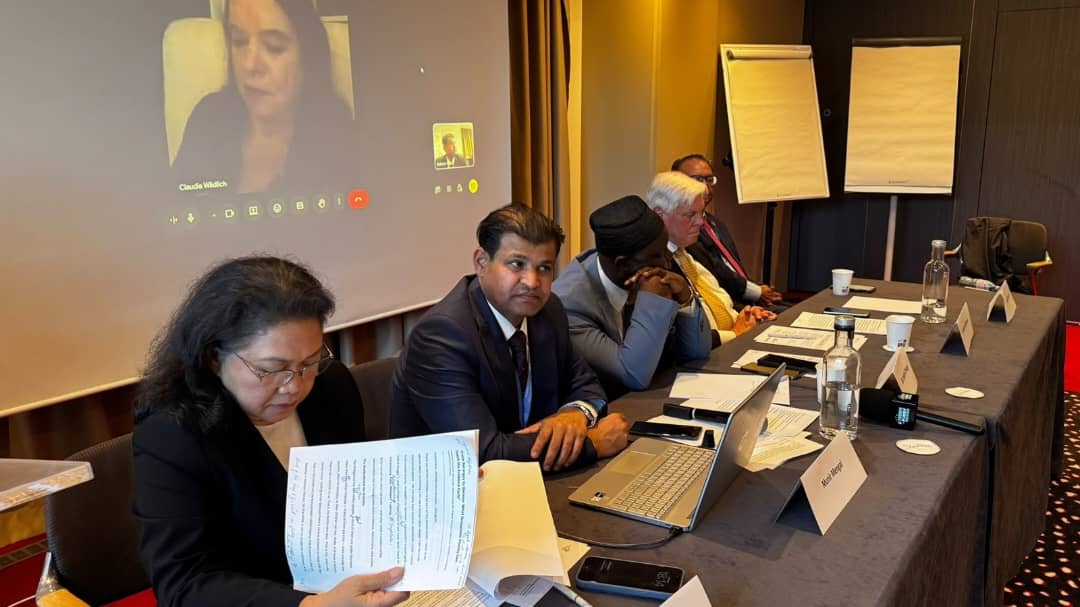
On Friday, September 25, 2026, the Paris Integration Forum (PIF) hosted a conference on the sidelines of the United Nations Human Rights Council's 63rd session, which is currently taking place in Geneva, Switzerland.
The necessity to create effective international regulations for human rights violations and field documentation of such cases was among the many global human rights issues that were considered.
The conference, "From Local Evidence to Global Action: Connecting the Reality of Communities to Human Rights Policies," brought together human rights advocates from throughout the world, including journalists and academics. Before urging immediate action to draft international legislation suited to curbing such violations and ensuring better protection for those potentially exposed to them, the conference provided a forum for discussing methods of field documentation of human rights violations in local communities around the world and outlining the best ways to deal with them.
In addition to examining the jurisdiction of the International Criminal Court, the arrest of former Philippine President Rodrigo Duterte, enforced disappearance and extrajudicial killing in Kashmir, and other human rights cases from Balochistan and Japan, the conference brought attention to several global human rights issues, most notably the recent reports on the Sudanese Army's use of chemical weapons during the current war against the Rapid Support Forces.
Concerns raised
Fears and anxieties regarding "the Sudanese Army's chemical weapons": German politician and attorney Claudia Wadlich voiced her worries about recent US allegations that the Sudanese Army used chemical weapons in 2024 while the conflict was still going on against the Rapid Support Forces, emphasising the importance of taking them seriously.
In addition to urging the Sudanese Army to cooperate by permitting the examination of soil, water, and bodies buried at the locations mentioned in the reports, she thought the United Nations and the Organization for the Prohibition of Chemical Weapons needed to send an independent investigative mission.
In early September 2026, the American newspapers The New York Times and The Washington Post exposed a covert program in the Sudanese Army to develop and produce munitions based on chlorine gas, manufacture and test prototypes, then produce and stockpile hundreds of bombs. According to the investigative report, army commander Lieutenant General Abdel Fattah al-Burhan was aware of the program. In July 2026, the United States increased pressure on the government in Port Sudan by accusing the Sudanese Army of using chemical weapons in 2024 and imposing more sanctions on the country.
A dangerous escalation
Karl Gustav, the leader of "Seed-Africa," said that the allegations that the Sudanese Army is using chemical weapons in the ongoing conflict represent a risky escalation that would cause innocent civilians to suffer even more. Additionally, Gustav pointed out that the United States imposed sanctions on Sudan after it confirmed the use of chemical weapons in the al-Jili area of Bahri in 2024. This suggests that something did happen, but he also cited the Sudanese Army's denial of this and its insistence on the conclusions of a national committee that found no evidence.
Gustav acknowledged that the purportedly used chlorine gas would seem like a common chemical when used in a civilian setting but emphasised that its intentional use in an act meant to harm people would surely transform it into a "chemical weapon."
He added: "Chemical warfare is not just another battlefield tactic… it attacks human dignity, weakens international norms built over generations, and increases the risk of imitation and retaliation."
He continued: "Sudan's civilians need more than mere expressions of concern; they need verification, justice, and sustained international action."
Karl Gustav concluded that the wisest course of action is to send an impartial UN commission to uncover the truth about this perilous issue, with the Sudanese Army fully accepting a three-phase cycle for rights protection. Dr Joseph Chongsi, a human rights expert and consultant, said evidence is the most crucial component of the human rights protection cycle, which starts with recording violations on the ground, proceeds to verify the evidence, and then submits it to the appropriate bodies.
While gathering evidence, Chongsi noted that media professionals, investigators, and members of non-governmental organisations have significant challenges. He clarified that in order to obstruct documentation attempts, offenders purposefully destroy evidence and erect barriers. In the context of his comments on the situation in the Kashmir region, politician and human rights advocate Sardar Shaukat Ali Kashmiri illuminated the challenges faced by NGOs and media organisations in Pakistan, particularly the enormous struggle involved in gathering evidence of rights violations and reporting on them. In a similar vein, independent Italian journalist Francesca Marino highlighted the challenges of obtaining proof and media attention when states are directly responsible for the infractions.
Marino cited conclusions she came to while visiting Pakistan and keeping an eye on the situation in Balochistan, indicating that journalists and human rights advocates on the ground face very significant challenges. Angelita Muf, a Filipino human rights activist, provided insight into the state of human rights in her nation. She pointed out that the Philippines is a democratic nation with an effective legal system, but she expressed grave concerns about the International Criminal Court's intervention without following the proper legal procedures and demanded that its jurisdiction be reviewed. Muf has serious reservations about the way former Philippine President Rodrigo Duterte was taken into custody and brought before the International Criminal Court.
By Khalid Mohammed