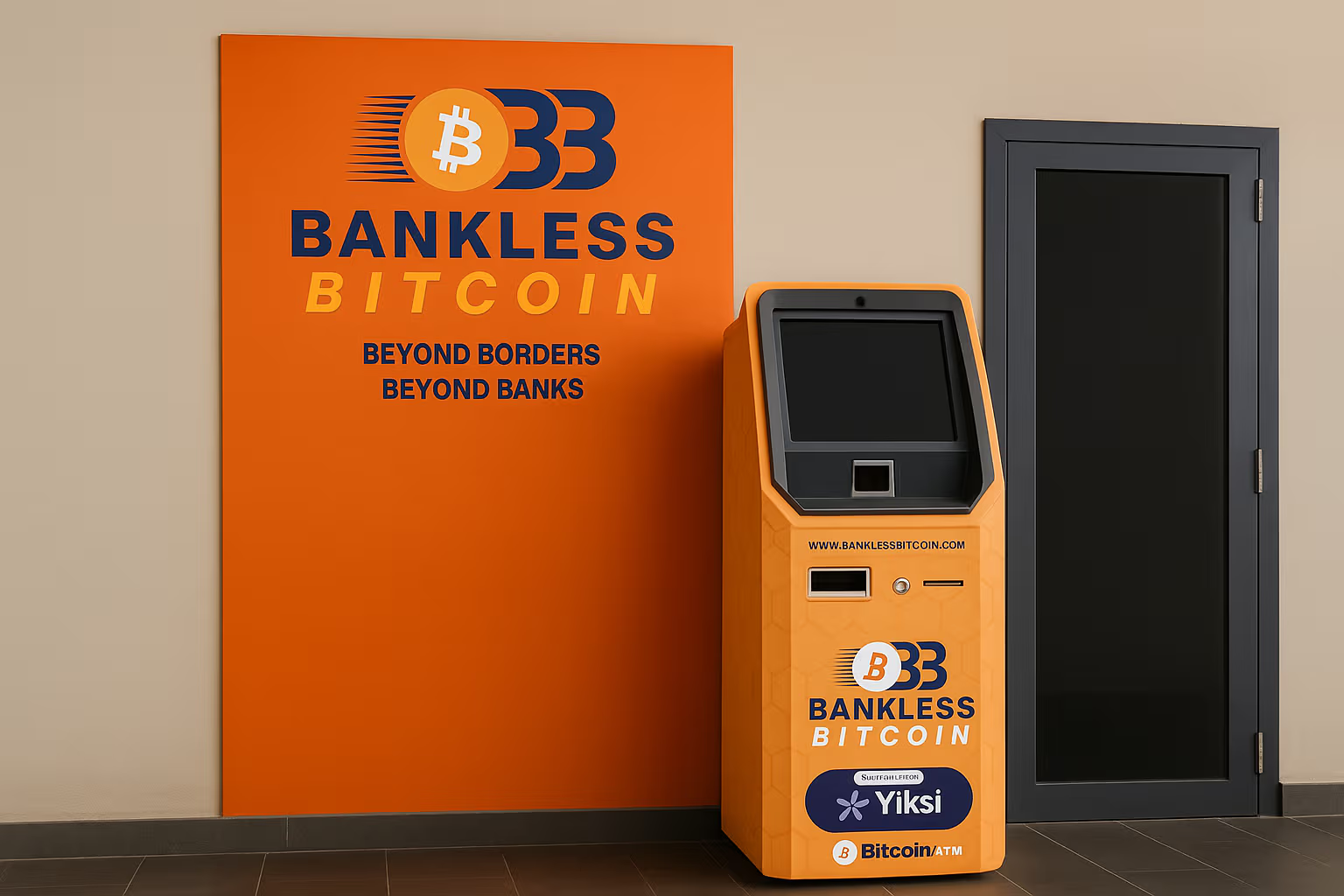

In a major step for crypto adoption, bright orange Bitcoin ATMs (BTMs) have appeared in prominent Nairobi shopping centers.
This strategic deployment comes just days after Kenya’s groundbreaking Virtual Assets Service Providers (VASP) Act, 2025, took effect, signaling a new era for digital assets in the country.
You can now find these “Bankless Bitcoin” kiosks in high-traffic retail hubs like Gigiri, Westlands, and Ngong Road, often installed right beside traditional bank ATMs.
But what are these machines, and what does the new law mean for you? Here’s everything you need to know.
What Are Bankless Bitcoin ATMs?
Think of these BTMs as specialized kiosks for buying and selling Bitcoin with cash. They offer a simple, tangible bridge between physical money and digital currency.
-
Buy Bitcoin with Cash: Insert Kenyan shillings, and the machine sends Bitcoin directly to your digital wallet.
-
Sell Bitcoin for Cash: Send Bitcoin from your wallet to the machine’s address, and it dispenses cash on the spot.
Placed in upscale malls, these machines are a bold push to bring cryptocurrency services into Kenya’s formal retail landscape.
The New Rules of the Game: Kenya’s VASP Act, 2025
The timing is no coincidence. The Bitcoin ATMs arrived just as the VASP Act, 2025, came into force on November 4, 2025. This law establishes Kenya’s first comprehensive regulatory framework for digital assets.
Key takeaways from the new law:
-
Co-Regulation: The Central Bank of Kenya (CBK) and the Capital Markets Authority (CMA) have been named the official co-regulators for the crypto sector.
-
Mandatory Licensing: All Virtual Asset Service Providers (VASPs)—including exchanges, wallet providers, and platforms like these BTMs—must be licensed and supervised.
-
Focus on Compliance: The law mandates strict adherence to Anti-Money Laundering (AML) and Counter-Terrorism Financing (CFT) rules.
A Critical Warning from Regulators:
The CBK and CMA have issued a joint notice stating that no VASP has been formally licensed yet. The National Treasury is still drafting the detailed regulations needed to open the licensing process. Any entity claiming to be fully approved is operating outside the new legal structure.
Two Sides of Crypto Adoption in Kenya
The launch of formal BTMs highlights a fascinating duality in how Kenyans are embracing Bitcoin.
1. The Formal, “Digital Gold” Vector
The new ATMs in upscale malls represent Bitcoin as a speculative, borderless asset for the formal economy—akin to digital gold.
2. The Grassroots, “Financial Freedom” Vector
Meanwhile, Bitcoin has been thriving at a grassroots level for years. In communities like Kibera, initiatives have used Bitcoin to promote financial inclusion.
A project by fintech startup Afrobit Africa, for example, has been paying local garbage collectors in Bitcoin (satoshis) since 2022. This bypasses the need for bank accounts and provides a low-fee, efficient way to transact using the Lightning Network. For these approximately 200 users, Bitcoin isn’t just an investment; it’s a practical tool for daily life, sometimes preferred over M-PESA due to lower transaction costs.
What This Means for Kenya
The juxtaposition of orange BTMs in glitzy malls and sustained crypto use in informal settlements paints a clear picture: Kenya’s digital asset market is maturing rapidly.
We are witnessing an active, previously unregulated space begin its transition into a future defined by rigorous compliance and supervision. For the average Kenyan, this means more accessible and, eventually, safer ways to interact with the world of cryptocurrency.