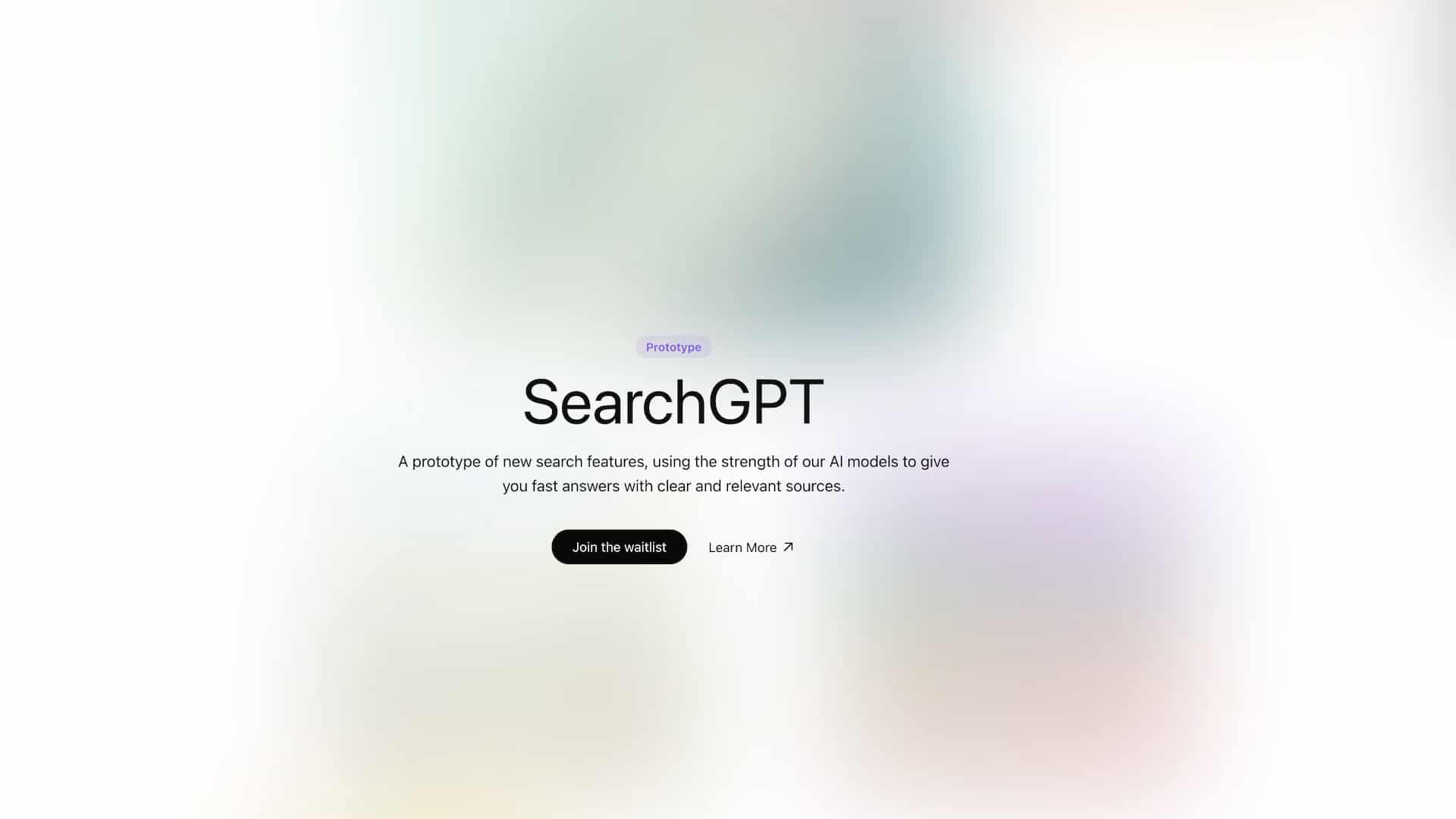

OpenAI has launched a prototype called SearchGPT, aiming to revolutionize online search with the power of artificial intelligence.
The innovative feature combines the capabilities of OpenAI’s AI models with real-time web information, promising to deliver faster, more relevant results and a more conversational search experience.
A Smarter Way to Search:
SearchGPT is designed to tackle the frustration of tedious web searches, often requiring multiple attempts to find what you need.
By integrating AI with real-time web data, SearchGPT promises to provide direct, up-to-date answers with clear links to relevant sources.
Conversational Search, Powered by AI:
Users can ask follow-up questions, building upon shared context and creating a more natural conversational experience, similar to interacting with a human. This dynamic approach aims to make online search more intuitive and engaging.
Partnering with Publishers for a Flourishing Ecosystem:
OpenAI emphasizes its commitment to fostering a thriving ecosystem for publishers and creators. SearchGPT prioritizes showcasing high-quality content, with prominent attribution and links to source material. This aims to connect users with publishers and drive engagement.
Collaboration and Publisher Control:
OpenAI has partnered with publishers like The Atlantic and News Corp to develop SearchGPT and obtain valuable feedback. To ensure publisher control, OpenAI is also introducing a mechanism for publishers to manage how their content appears in SearchGPT.
Importantly, the prototype remains separate from OpenAI’s generative AI foundation models, meaning sites can be featured in search results even if they opt out of training data contributions.
The Future of Search:
This prototype represents a significant step towards a future where AI plays a central role in online search. OpenAI plans to leverage user and publisher feedback to further refine the SearchGPT experience and eventually integrate its best features into ChatGPT.